
Why is engine replacement one of the most significant car ownership decisions? When your engine dies, it is not just a matter of getting into the road again, but a matter of cost, reliability and long-term performance. Most motorists have three primary choices, which include purchasing a used engine, opting to use rebuilt engines, or investing in remanufactured engines. The paths available have their own price range, warranty coverage and life expectancy, thus it is essential to know the difference before spending thousands of dollars.
In this guide, you will know everything about what remanufactured engines are, how they differ compared to used or rebuilt engines, what type of prices you can expect, and what the main things are that you should check before purchasing. It will inform you to make a confident, informed choice regardless of whether you own a compact car, a family SUV, or a heavy-duty pickup.
You will also have some practical examples, such as popular choices, such as a remanufactured Toyota engine or a Ford remanufactured engine, to illustrate how the process works in different makes and models. At the very least, you will understand how to select the most appropriate solution regarding your budget and in relation to the long-term reliability of your vehicle.
What Is a Remanufactured Engine?
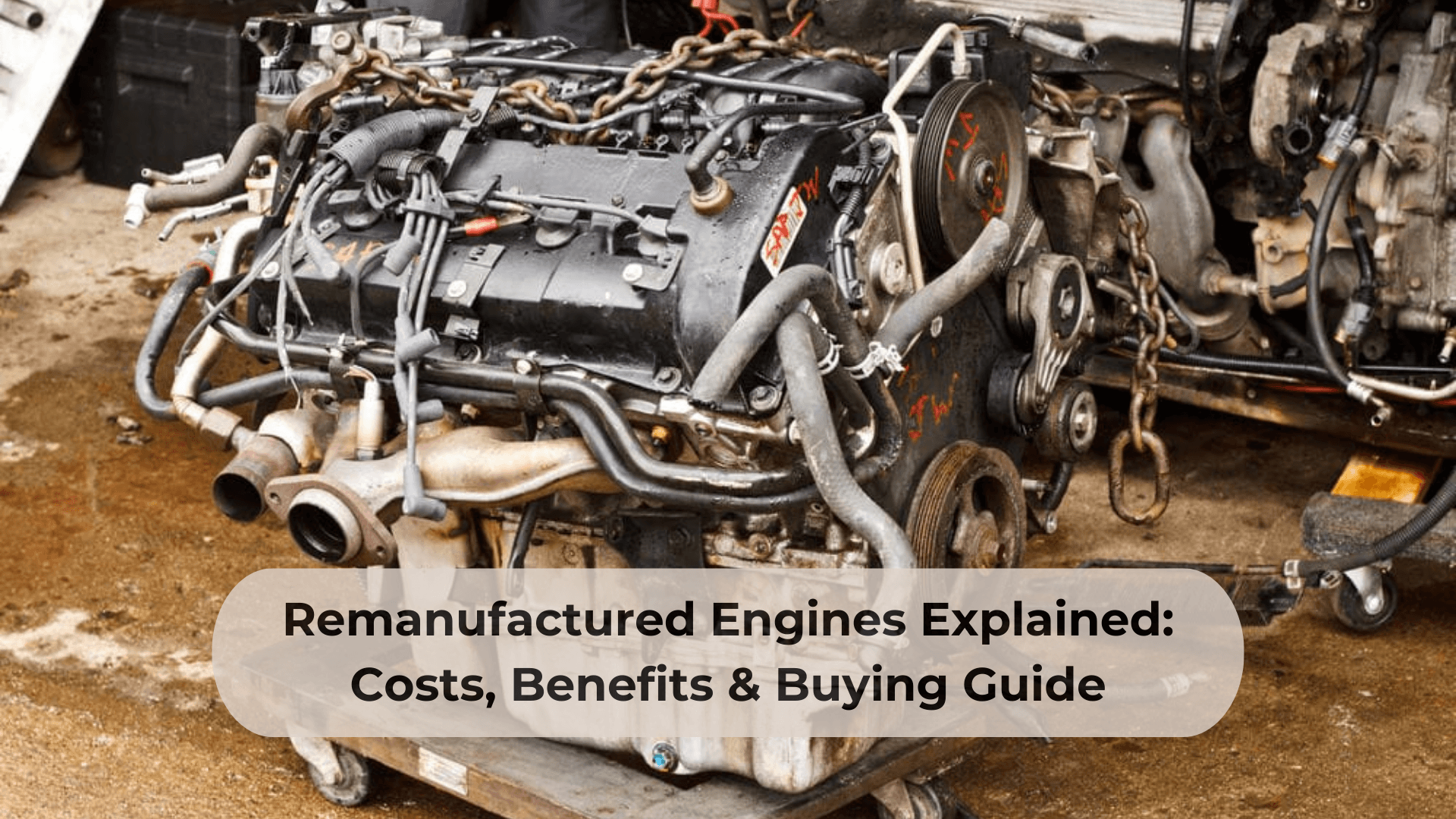
A remanufactured engine is an already used engine which has undergone a complete breakdown, machined to the exact requirements of the original manufacturer, and reassembled with utmost care. This intricate exercise takes the engine to an almost new functioning state. Remanufacturing is a process that deals with all the internal systems and components, as opposed to rebuilt engines, where only the failed or worn parts are used. Any person who plans to change their engine should know this difference.
The Remanufacturing Process
- Inspection and Cleaning- The engine is disassembled to the bare block. All parts are washed and scrutinized for cracks, wear, or warping.
- Machining and Precision Work – Cylinder bores are honed, crankshafts are ground or replaced, and all tolerances are returned to precise OEM (Original Equipment Manufacturer) standards.
- Replacement of Worn Parts Key parts of the engine, like pistons, bearings, gaskets and timing systems, are replaced with new or highly re-engineered parts that meet or exceed OEM requirements.
- Testing: Once the engine has been reassembled, it is tested at pressure and sometimes at a dynamometer to test the oil pressure, compression, and general performance of the engine.
Common OEM Standards
The reliable remanufacturers will comply with ISO and SAE requirements. These standards guarantee that all the specifications, such as the torque values up to the surface finish, will counter or surpass the factory expectations, giving the player a consistent quality and reliability in the long run.
Benefits of Choosing a Remanufactured Engine
The best thing about a remanufactured engine is that it is as good as a new motor, factory-made or even better. Every internal component is replaced or machined to precise specifications, and the engine is likely to serve just as long as an original component.
- Performance: A remanufactured engine has performance, in terms of horsepower, torque, and fuel economy, equivalent to that of a brand-new engine, and it makes for a smooth and consistent ride.
- Environmental Impact: Recycling of engine blocks and other valuable parts will reduce wastage and save energy, thus making it a friendly solution to any environmental impact that will enable recycling and long-term ecological sanity.
- Warranty Support: Most remanufactured engines come with a strong multi-year warranty, which is an advantage compared to installing a used engine or a salvage-yard motor.
These advantages cut across all makes and models, including remanufactured Toyota engines, Ford remanufactured engines and high-performance models, including remanufactured 5.7 Hemi engines. Its quality is also consistent, irrespective of the brand you are choosing, since the process of rebuilding is highly rigid.
Common Types & Popular Remanufactured Engines
Remanufacturing applies to almost all types of engines available in the market as it provides vehicle owners with a broad selection of safe options.
- Domestic Brands: There are the time-honored GM small-blocks, the universal Ford Modulars, and the Hemi family of Chrysler. One of the most popular ones is the high-output remanufactured 5.7 Hemi, which has been popular with muscle-car restorations and heavy-duty trucks that require factory-level performance. These engines are popular with pickup owners and hot-rod builders who like the proven power, easy availability of parts and long service life of these engines.
- Imports: Customers who prefer foreign models tend to seek a remanufactured Toyota engine to use in reliable sedans such as the Camry or rigid trucks such as the Tacoma and Tundra. Honda Motors, particularly the V-6 models, continue to sell well among the daily commuters, and a Mercedes-Benz inline-6 and V-8 are in demand by the European luxury customers. These import engines have been remanufactured thoroughly to be of original specs, providing a close to new driving experience without needing to pay a premium on a new unit.
- Diesel vs. Gasoline: The debate over whether to use diesel or gasoline will continue to hang in the balance with the usage of vehicles. Commercial fleets and towing uses are usually heavy-duty diesel, like Cummins, Power Stroke or Duramax, due to their torque and fuel economy. Gasoline engines, however, are predominant in the personal vehicle replacements due to their low initial price and ease of maintenance.
Comparing these alternatives, a significant portion of buyers also consider the advantages of a rebuilt Toyota engine or the reliable remanufactured 5.4 Ford engine, which is also known to be very balanced in terms of performance as well as cost. Chrysler Pentastar 3.6 engine is another one worth mentioning as it is valued due to its smooth power delivery and the ability to fit in numerous models of both Jeep and Dodge.
Every one of these engines has a price range, warranty and availability attached to it. Still, the intention is to maintain the same: the reliable, like-new performance that keeps any vehicle on the roads many years ahead.
Cost of a Remanufactured Engine
Re-manufactured engines are relatively expensive to manufacture, with the price ranging between 2500 and 6000 dollars or even higher, depending on the make, model, and complexity of the entire vehicle. The cost is also usually affected by labour to remove and install, which is typically another 1000-2500.
The determinants of price are:
- Engine Design: Generally, the turbocharged and diesel engines are expensive.
- Movie/model: Luxury or imported cars are also likely to be charged more due to the shortage of parts.
- Warranty: Extended warranties can be more expensive.
Comparison Used vs. Rebuilt vs. Remanufactured
The same engine could be purchased in the salvage yard as used and may cost only 1,000 dollars, yet it is hazardous as one cannot know the inner wear of the engine. The rebuilt engine cost is in the mid-range, as fewer parts are replaced, and there may be minimal testing. A remanufactured engine offers the best warranty, warranty, and longtime value combination.
Long-Term Cost Savings
The initial cost of a reman unit is more expensive, but the investment can usually be rewarded. Better fuel economy, reduced number of unforeseen maintenance costs, and better resale value save on total cost in the long term. The 5.7 Hemi remanufactured price can be justified even at high demand for the product, when we consider the durability and good warranty cover.
Warranty & Reliability Considerations
The remanufactured engine warranty is one of the strongest points of the reman engine. A typical warranty in most instances spans three years or even 100,000 miles, and other reliable suppliers extend warranties. In Rebuilt engine vs remanufactured engine reliability, the remanufactured engine is at all times more reliable.
The reason is that it is completely torn apart, thoroughly inspected and severely tested, which reveals and remedies latent problems that a simple rebuild might overlook, cutting down the potential outcomes of untimely failures and expensive maintenance considerably.
Risks & Challenges with Remanufactured Engines
Despite the benefits of remanufactured engines, it is essential to consider a few considerations that buyers should not forget:
- Greater Start-Up Price: Remanufactured choices are more expensive to start up than used engines or those that have been repurposed and rebuilt. Though this cost is usually compensated by the long-term reliability, it is imperative to plan and consider the prices to spend as per your financial budget.
- Core Return Requirements: The vast majority of remanufacturers will either set a deposit or a core charge until the old engine block is returned. It is essential to know the core return policy since the inability to deliver the old engine on time and in the necessary condition may impose some extra charges. The policies do vary considerably, and thus, read carefully and know your deadlines as well as the conditions of returning your core.
- Supplier Reputation: The remanufacturing of the engines by the various suppliers may significantly differ. There are those suppliers which adhere to stringent testing and quality procedures, and others which may cut corners. Confirm certifications (e.g. ISO, SAE) and reviews of customers and inquire about their testing process to prevent surprises. By selecting a well-known supplier, the chances of getting an engine that does not match the expectations are minimal.
By remaining conscious of these aspects, buyers will be able to evade most of the common remanufacturing engine problems, such as incorrect matching parts, premature wear, and delayed deliveries. Researching the suppliers and learning the policies will also help in the more straightforward process of installation and a more stable performance.
How to Choose the Right Remanufactured Engine
Remanufactured engines are tricky to pick, and one needs to be careful. A checklist before making a purchase would include the following:
- VIN Match: You should always make sure that the VIN code of the engine is similar to that of your vehicle. Any minor incompatibility can lead to issues during installation or warranty.
- Supplier Reputation: Use suppliers whose track record is good, certifications and definite quality assurance systems. The established remanufacturers will have a higher likelihood of manufacturing engines of either standard or beyond OEM.
- Warranty Check: Check to ensure that there is a warranty and the coverage, the warranty time and non-coverage. The other warranty coverage will involve labour on installation, which will save much money in the event of trouble.
- Mileage and Documentation: Provided, where possible, detailed build sheets, test results and maintenance history. In this article, you will be assured that the engine is functioning well and it will work to your expectations.
When you are searching for a remanufactured Toyota engine or a remanufactured Ford engine, you should also inquire about the updates or improvements which could be done during the remanufacturing process. Numerous remanufacturers strengthen poorly made factory parts, refine tolerances, or substitute parts which are subject to early failure. This can lead to an engine which is even more resilient than its predecessor.
Also, speak about the existence of an engine exchange program. These programs give you the privilege to exchange your old engine with a remanufactured one, which makes the logistics easy and usually incurs less downtime of the vehicle. Being informed about all alternatives is a way of making a selection of the most suitable engine to use on your particular vehicle and use needs.
Installation & Maintenance Tips
Warranty: Since the product needs to be very reliable in the long run, professional installation is thus a requirement. Some of the hints on how to keep your engine going till the investment pays off:
- Break-In Period: It will typically advise the builders to be 500-1000 miles of light travel with an early oil change.
- Fluids and Filters: Replace filters as per the recommendation of the manufacturer, as and when the oil is used.
- Preventive Care: Checking of the belts, hoses and cooling system regularly will assist in averting the issue of overheating or lack of oil.
Ensuring that the engine life is not below 100,000 miles is not a challenging task when it is mounted appropriately, and proactive maintenance is conducted on the same.
FAQs About Remanufactured Engines
How long does a remanufactured engine last?
A well-installed and serviced remanufactured engine will last 100,000 miles or longer, usually just as long as a new one. The correct maintenance procedures guarantee the extension of the expectancy of remanufactured engines.
Is a remanufactured engine better than a rebuilt one?
Yes. A remanufactured engine is completely disassembled, machine and tested to OEM standards, whereas a rebuilt engine typically will replace only parts that are worn or failed. This renders the re-manufactured vs rebuilt engines to be more reliable and predictable in their performance.
Do reman engines have new parts?
Yes. In the process of remanufacturing, vital parts such as pistons, bearings, gaskets and timing parts are substituted with new or OEM quality parts that guarantee that the engine runs like a new one.
Does a remanufactured engine add value to a car?
By installing a remanufactured engine, it is possible to attain factory-like operation and reliability, which may be better in resale and less maintenance in the long term. This is a significant factor in the replacement of the engine.
Conclusion
Deciding to purchase a remanufactured engine is a grave one, yet it can be the best choice in terms of costs, reliability, and environmental sustainability. You can install an engine that will work almost as new and which will serve you for many years by learning the step-by-step process, cost analysis, and working with a strict selection checklist. Remanufactured engines save materials, minimize wastage, and in many cases, they come with warranties that are equivalent to those offered by the factory, thus being a viable alternative to drivers who are concerned about the performance and long-term costs.
Check your instant quote now at iBidAuto.com and find the right remanufactured engine for your vehicle today.