
The global automotive industry is entering one of its most decisive moments. For decades, sport utility vehicles (SUVs) have dominated sales charts, favored by families, commuters, and adventurers alike. In 2025, however, the SUV segment is undergoing a transformation unlike any seen before: the electrification of mainstream models.
Automakers across the globe are rethinking how SUVs are designed, powered, and marketed. What was once a niche concept — the electric SUV — is quickly becoming the centerpiece of every major manufacturer’s lineup. This article takes a closer look at how carmakers are preparing for this monumental shift.
The Growing Market for Electric SUVs
According to industry forecasts, electric SUVs will account for a significant portion of EV sales by 2025. Their appeal lies in a blend of practicality, range, and advanced technology. Consumers no longer see electric vehicles as experimental. Instead, they are demanding SUVs that deliver both sustainability and everyday usability.
Governments have also played a role, offering incentives and setting deadlines for phasing out combustion engines. This combination of consumer demand and regulatory pressure has pushed automakers to accelerate their EV strategies.

Automaker Strategies for 2025
While every brand has its own approach, certain strategies stand out as industry-wide trends.
Battery Innovation
The shift from lithium-ion to solid-state batteries is one of the most anticipated technological leaps. By 2025, several automakers aim to roll out models that charge faster and drive longer distances, reducing “range anxiety” once and for all.
Software-Centric Vehicles
No longer just machines, cars are becoming platforms for software. Automakers are investing heavily in over-the-air (OTA) updates, voice assistants, and semi-autonomous driving systems. This allows vehicles to improve over time, extending their lifespan and value.
Sustainable Manufacturing
It is not just the vehicles themselves that are going green. Companies like BMW and Hyundai are investing in carbon-neutral factories, recycled materials, and eco-friendly supply chains. Consumers are beginning to look beyond tailpipe emissions and toward the overall environmental impact of the cars they drive.
Case Studies: Leading the Transition
Tesla
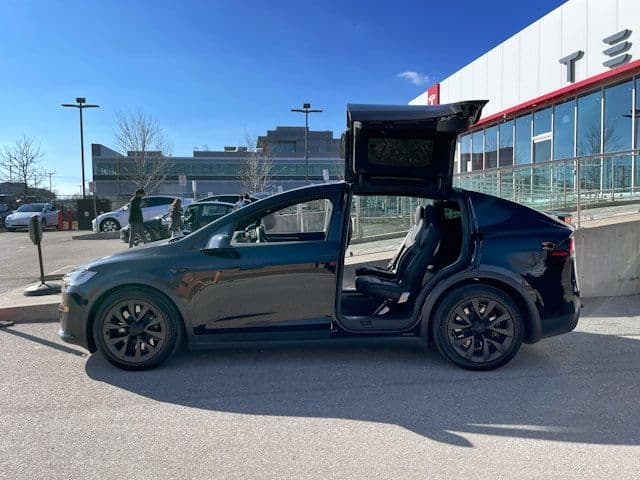
Tesla has built its reputation on electric mobility, and by 2025 the brand is doubling down on SUVs. The Model X continues to be its flagship SUV, but the company is also preparing updates that focus on affordability and mass adoption.
BMW
BMW is balancing luxury with responsibility. The iX, one of its most advanced EVs, incorporates sustainable materials and cutting-edge digital technology. BMW’s broader strategy is to make premium electric SUVs aspirational while still aligning with environmental goals.
Hyundai and Kia
Hyundai’s Ioniq 7 and Kia’s EV9 are prime examples of how Korean automakers are pushing into the family-oriented electric SUV market. With competitive pricing, spacious interiors, and unique features such as solar charging roofs, these models aim to capture mainstream buyers.
Challenges on the Road Ahead
Despite impressive progress, automakers face several hurdles before electric SUVs become the default choice.
- Charging infrastructure, while growing, is still inconsistent across many regions.
- Battery production remains expensive, raising vehicle costs.
- Consumer education continues to be necessary, especially for first-time EV buyers.
"The automotive industry is not just changing engines, it’s reinventing the entire driving experience," notes a recent report from an industry analyst. "Electric SUVs represent the bridge between consumer demand for space and comfort, and the global necessity for sustainability."
This statement captures the essence of the challenge: creating vehicles that are both desirable and responsible.
The Future Outlook
By 2030, most automakers have pledged to significantly reduce or eliminate gasoline-powered SUVs from their lineups. The transition is well underway, and 2025 marks a pivotal checkpoint. Consumers can expect to see more variety, lower entry prices, and faster adoption of technologies like autonomous driving and solid-state batteries.
Electric SUVs are not just an alternative to traditional vehicles; they are becoming the new standard of mobility. For carmakers, success will depend on balancing innovation with accessibility, ensuring that these vehicles are not only sustainable but also practical for everyday life.